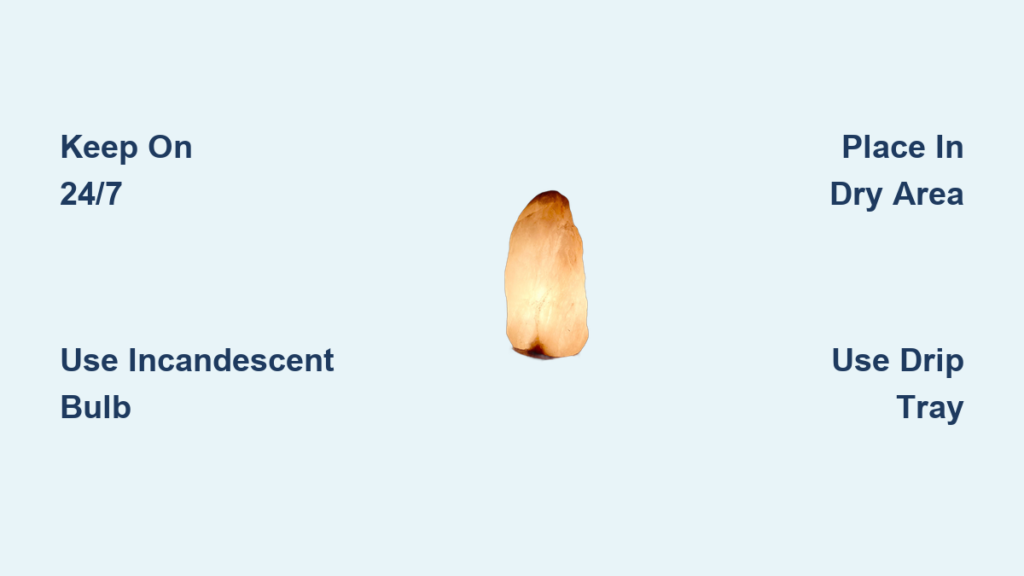
If your Himalayan salt lamp is sweating or leaving damp spots on your furniture, you are dealing with a common issue called hygroscopy. Salt naturally attracts moisture from the air, and when the lamp cools down, that moisture condenses into visible droplets. The good news is you can prevent this leaking entirely with the right approach.
This guide covers everything you need to stop salt lamp leakage, protect your surfaces, and keep your lamp running safely for years. You will learn about heat-based solutions, smart placement strategies, humidity control methods, and maintenance tips that actually work.
Keep Your Salt Lamp On 24/7
Running your salt lamp continuously is the most powerful way to stop leakage. The heat from the bulb evaporates absorbed moisture before it can form droplets and drip.
Why Heat Prevents Sweating
Salt pulls water vapor from the air through its hygroscopic properties. When the lamp is warm, moisture evaporates as fast as it is absorbed. When the lamp cools, that stored moisture condenses and may drip onto surfaces below. Keeping the lamp on prevents this cooling cycle entirely.
Ideal Usage for Leak Prevention
The minimum recommended operation is 16 hours daily, but leaving the lamp on 24/7 provides the best results. With a 15 to 30 watt bulb, the annual energy cost is less than ten dollars, making continuous operation both effective and economical.
Pro Tip: Use a timer or smart plug to automate operation if you tend to forget to turn the lamp on.
Use the Right Bulb for Maximum Heat
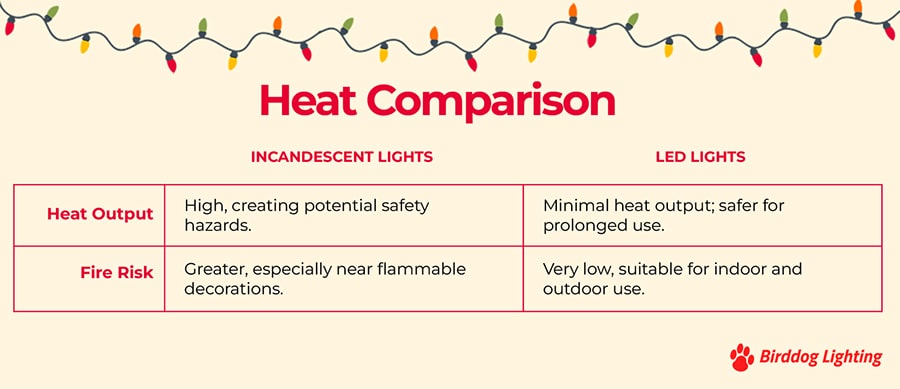
Not all bulbs prevent sweating equally. The type and wattage directly affect how well your salt lamp dries itself and stays leak-free.
Choose Incandescent Over LED
| Bulb Type | Heat Output | Leakage Risk |
|---|---|---|
| 15W Incandescent | Moderate | Low (with long use) |
| 25-30W Incandescent | High | Very Low |
| Standard LED | Minimal | High |
| Heated LED | Moderate | Moderate |
Incandescent bulbs produce the heat needed to keep salt dry. Avoid standard LED bulbs since they produce minimal heat and often cause increased sweating.
Recommended Wattage by Lamp Size
Small lamps weighing 2 to 5 pounds work best with 15 watt incandescent bulbs. Medium lamps between 6 and 15 pounds need 25 watt bulbs. Large lamps over 16 pounds benefit from 25 to 30 watt bulbs for maximum heat output.
Warning: Never exceed the socket rated wattage, as this risks melting, fire, or electrical damage.
Place the Lamp in a Dry Location
Where you put your salt lamp matters just as much as how long it runs. Avoiding high-moisture zones reduces water absorption at the source.
Best Rooms for Salt Lamps
Living rooms, bedrooms with climate control, offices, and study areas provide ideal conditions. These spaces typically have stable temperatures and lower humidity levels that minimize sweating.
Locations to Avoid
Bathrooms, kitchens near sinks or stoves, laundry rooms, and basements should be avoided unless dehumidified. Also avoid placing lamps near humidifiers, open windows, or outdoors on damp porches.
Fact: Salt lamps in desert climates rarely sweat, proving that dry air stops leakage before it starts.
Reduce Room Humidity with Dehumidifiers
Even with a hot bulb, high ambient humidity overwhelms the lamp is ability to stay dry. Lowering moisture in the air is a game changer for leak prevention.
Effective Humidity Control Tools
Dehumidifiers work best for basements or humid homes and can cut humidity by 30 percent or more. Air conditioners reduce moisture during warm months, and exhaust fans remove steam from kitchens and bathrooms. Moisture absorbers like Damprid or silica gel packets provide additional protection.
User Hack: Place desiccant packs under the lamp base to absorb local moisture, which can reduce humidity by up to 15 percent in tight spaces.
Protect Surfaces with a Drip Tray or Mat

You cannot always prevent every drop, but you can stop moisture from damaging your floors and furniture. A protective base catches any leakage and keeps surfaces safe.
Best Materials for Protection
Ceramic or glass dishes work well because they are non-porous and easy to clean. Silicone mats and trivets offer heat resistance and flexibility. Metal trays provide durability and style, while onyx crystal bases naturally resist water. Avoid raw wood, as it absorbs saltwater and warps quickly.
Maintenance Tips for Trays
Empty collected liquid daily and wipe dry to prevent mold. Clean salt residue regularly to avoid crust buildup that can damage surfaces.
Warning: Wooden bases often show water damage within weeks in humid rooms. Upgrade to onyx or metal for long-term use.
Clean Safely Without Damaging the Lamp
Dusting or wiping your salt lamp is fine, but harsh cleaning accelerates erosion and increases leakage risk over time.
Step-by-Step Cleaning Guide
Unplug and turn off the lamp first. Let it cool completely before cleaning. Use a slightly damp microfiber cloth to wipe gently. Do not soak, scrub, or use soap on the salt surface. Turn the lamp back on immediately after cleaning to dry the surface.
Clean only when necessary, as salt is self-sanitizing due to its antibacterial properties.
Expert Note: Brief contact with water will not destroy a quality salt lamp, but prolonged exposure will dissolve it over time.
Remove Salt Residue from Bases
When moisture evaporates, it leaves behind white salt crystals on the base or tray. These deposits are harmless but unsightly.
How to Remove Crystals
Use a plastic scraper or old credit card to gently lift residue without scratching. Wipe with a dry cloth afterward to remove any remaining particles.
Prevent Future Buildup
Always use a protective tray and keep the lamp on consistently to reduce evaporation cycles. Store desiccants nearby to lower localized humidity around the lamp.
Store Properly During Downtime
If you are traveling, moving, or storing your lamp for months, proper wrapping prevents moisture damage and prolongs its lifespan.
How to Store a Salt Lamp
Turn off and unplug the lamp first. Run it for 1 to 2 hours to dry out any absorbed moisture. Remove the power cord and store it separately. Wrap tightly in plastic wrap using multiple layers. Place in an airtight container or sealed bag. Keep in a dry indoor space away from windows.
Never store a damp lamp, as trapped moisture erodes the base and risks electrical corrosion.
Reintroducing After Storage
Unwrap the lamp and let it acclimate for 3 to 6 hours. Plug in and turn on immediately to begin drying the crystal.
Follow Electrical Safety Rules
Wet salt conducts electricity, so moisture near wiring or plugs creates shock and fire hazards that must be addressed.
Essential Safety Practices
Always unplug before cleaning or moving the lamp. Ensure the cord and plug are dry before use. Inspect the socket and switch monthly for corrosion. Use only UL-listed cords and bulbs. Confirm bulb wattage matches the socket rating.
Manufacturer Reality: No brand offers warranties against leakage, as it is considered normal behavior for authentic salt lamps.
Choose the Right Base Material
The base does more than support the lamp. It can resist or invite water damage depending on the material chosen.
Base Type Comparison
| Base | Water Resistance | Durability | Best For |
|---|---|---|---|
| Wood | Low | Moderate | Dry rooms only |
| Onyx | High | High | Humid areas, luxury setups |
| Metal | High | High | Modern decor, durability |
| Ceramic/Glass | High | Moderate | Decorative displays |
Trend Insight: Onyx bases are rising in popularity for premium salt lamps, offering both elegance and leak protection.
Buy Smart: Pick a Leak-Resistant Salt Lamp
Start strong by choosing a lamp built for your environment. Smart buying reduces future headaches and maintenance needs.
1. Verify It Is Real Himalayan Salt
Look for slight surface dampness in humid air, which is a sign of authenticity. Natural color variations like pink, amber, and white streaks indicate real salt. Purchase from trusted brands with product guarantees. Avoid lamps that look too perfect, as coatings block moisture absorption and ruin air-purifying benefits.
2. Match Size to Room
Small lamps work well for desks or nightstands. Medium lamps around 8 to 12 pounds are ideal for bedrooms. Large lamps over 15 pounds offer better heat retention and are suited for living rooms.
3. Check the Base Quality
Prefer onyx, metal, or sealed ceramic bases in humid areas. Ensure the socket is heat-resistant and non-conductive. Confirm the power cord is thick, flexible, and grounded.
Frequently Asked Questions About Salt Lamp Leakage
Why does my salt lamp leak water?
Salt lamps are hygroscopic, meaning they naturally attract and absorb water vapor from the air. When the lamp is cool, this moisture condenses into droplets that may drip onto surfaces. This is normal behavior for authentic Himalayan salt lamps.
Is a leaking salt lamp dangerous?
The moisture itself is not dangerous, as it is a dilute saline solution. However, wet salt conducts electricity, so ensure the cord, plug, and socket are dry before use. Always unplug the lamp before cleaning or moving it.
Can I use my salt lamp in the bathroom?
Bathrooms are not recommended due to high humidity from showers and sinks. If you must use a salt lamp in a bathroom, run a dehumidifier or exhaust fan to reduce moisture in the air.
Will LED bulbs prevent salt lamp sweating?
Standard LED bulbs produce minimal heat and are not effective at preventing sweating. Use incandescent bulbs between 15 and 30 watts for best results in keeping the salt dry.
How do I stop my salt lamp from sweating overnight?
Keep the lamp on continuously rather than turning it off at night. The heat from the bulb evaporates moisture as it is absorbed, preventing condensation when the lamp cools.
Does a bigger salt lamp sweat more?
Larger lamps absorb more moisture but also retain heat longer, helping them self-dry more effectively. Match lamp size to your room size for optimal performance.
Key Takeaways for Preventing Salt Lamp Leakage
Salt lamp leakage is not a defect but a sign your lamp is working and made from authentic Himalayan salt. The most effective prevention method is keeping your lamp on 24/7 with a 25 to 30 watt incandescent bulb, as the heat evaporates moisture before it can condense and drip.
Control your environment by placing the lamp in dry rooms away from bathrooms and kitchens, and consider using a dehumidifier in humid spaces. Always use a protective tray or onyx base to catch any moisture and protect your furniture. With these strategies in place, you can enjoy the warm glow and wellness benefits of your Himalayan salt lamp for decades without a single drip causing damage.