Choosing the right lamp harp might seem like a small detail, but it’s essential for both function and style. A lamp harp is the U-shaped wire frame that holds your lampshade securely in place, connecting it to the base via a saddle and finial. If the harp is too short or too tall, your shade will sit awkwardly, either hiding too much of the lamp or leaving hardware exposed. The good news is that measuring a harp correctly takes just minutes and ensures a polished, professional look. Whether you’re replacing a broken harp or upgrading your lamp with a new shade, this guide walks you through every step to get the perfect fit.
You will learn how to measure harp height accurately, understand key shade dimensions that affect harp selection, avoid common mistakes, and verify your setup with simple visual tests. By the end, you will know exactly how to match your harp to your lampshade for balanced proportions and optimal light diffusion.
Measure Harp Height Correctly
To replace or upgrade a lamp harp, you must measure its height precisely. Standard harps range from 6 to 12 inches and are sized in half-inch increments, so even a small measurement error can result in a poor fit.
Remove and Position the Harp
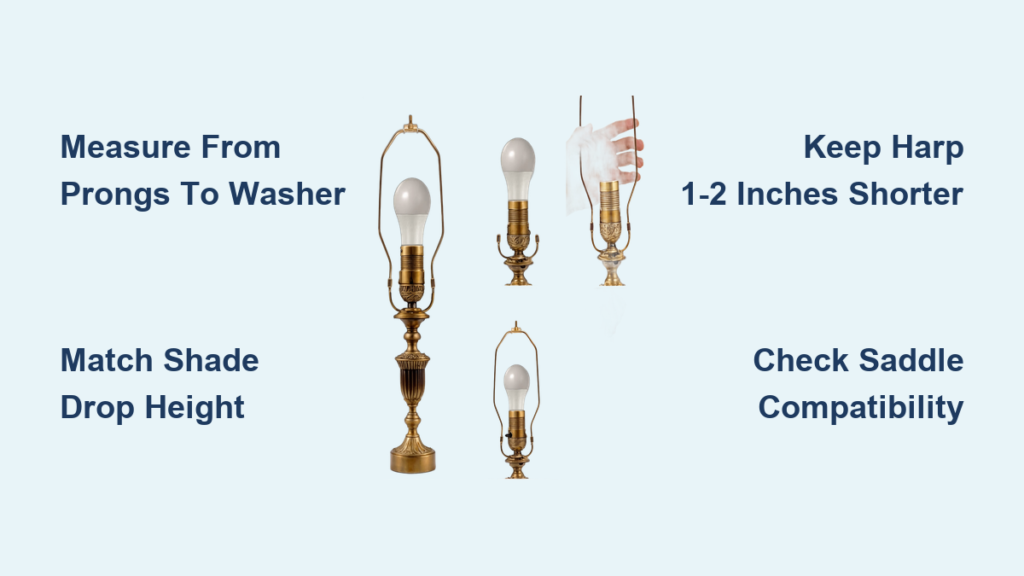
Start by detaching the existing harp from the lamp. Gently lift it out of the saddle, which is the U-shaped base attached to the lamp body just below the socket. Once removed, lay the harp flat on a surface with the U-shape facing upward. This positioning ensures an accurate vertical measurement.
If you do not have the original harp, skip to measuring your lampshade’s drop to determine the correct replacement size.
Measure Between Correct Points
Use a ruler or measuring tape to record the distance from the top of the bottom prongs to the bottom of the top washer. This is the true harp height.
Include the curved section and upper stem down to where the shade washer rests. Exclude the threaded post above the washer and any mounting legs below the saddle.
Pro Tip: Never measure from the very bottom of the harp legs or the tip of the threaded stud. Doing so adds extra length and leads to ordering the wrong size. For example, if your measurement reads 9 inches, you need a 9-inch harp, with no rounding or estimating required.
Match Harp to Shade Dimensions
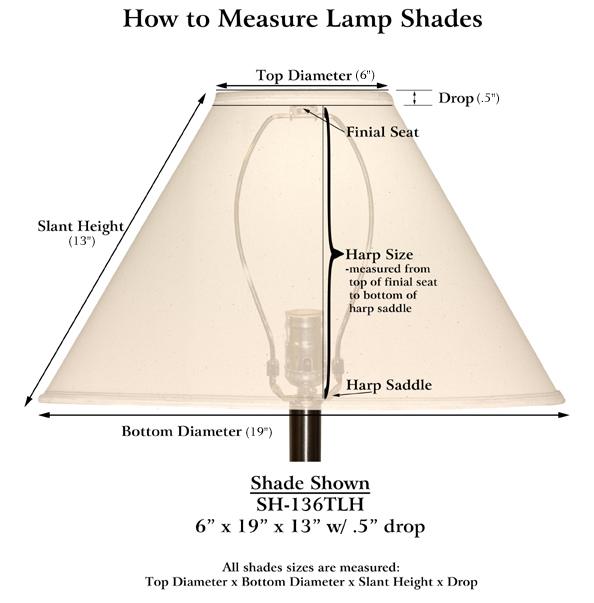
The harp does not work alone. It must align perfectly with your lampshade’s size and design. Understanding key shade measurements ensures your lamp looks balanced and functions safely.
Know Your Shade Height and Drop
Three critical shade dimensions influence harp selection. The first is side height, which is the vertical distance from top to bottom edge of the shade. The second is top and bottom diameters, which are the widths across the top and base. The third is drop, which is the distance from the center of the shade to the fitter.
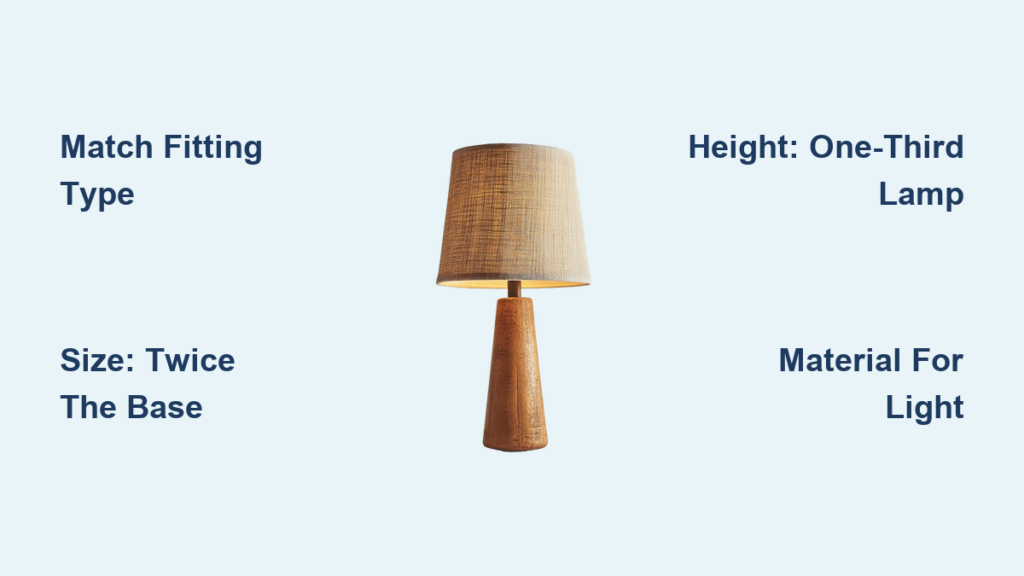
Rule of Thumb: The harp height should be 1 to 2 inches shorter than the shade’s side height. For example, a 10-inch tall shade typically pairs with an 8.5-inch or 9-inch harp.
But here is the key: the drop should match the harp height. If your shade has a 12.5-inch drop, use a 12.5-inch harp to center the fitter properly over the bulb.
Adjust for Shade Shape and Style
Not all shades follow the same rules. Here is how to adapt for different styles.
Drum or round shades stick to the 1 to 2 inch rule because symmetry makes sizing predictable. Tapered shades require careful drop measurement since fitters may sit higher or lower depending on design. Pleated shades are often styled lower for a classic look, so consider a slightly shorter harp. Clip-on or chandelier shades bypass the harp entirely and attach directly to the bulb.
Warning: Using a harp that is too tall with a short drop shade will leave the socket visible. Too short, and the shade may rest on the bulb or base.
Check Harp Compatibility

Even with the right height, your harp must work with other lamp components. Mismatched parts lead to instability, misalignment, or damage.
Saddle Type Matters
Some harps come with an integrated saddle, which is a U-shaped base that locks into the lamp. Others rely on a separate saddle built into the fixture. If replacing only the harp, ensure the new one fits your lamp’s existing saddle. If both are being replaced, choose a saddle harp for better stability, especially on floor lamps or heavy shades.
Expert Note: Saddle height is usually not included in harp measurement unless it is permanently attached. Always check manufacturer specs when in doubt.
Work With Reflector Bowls and Notches
Many floor lamp shades include a reflector bowl, often 10 inches wide, underneath to direct light upward. Shades with notched fitters offer flexibility. Over the notches accommodates larger bowls, typically 10 inches. Inside the notches fits smaller setups, usually 6 to 8 inches.
This design allows one shade to be used with or without a bowl. Simply reposition the fitter to change the configuration. A properly sized harp ensures the shade sits level regardless of which option you choose.
Universal Fit Tip: Shades over 12 inches wide commonly feature notched fitters for broader compatibility.
Choose the Right Harp Style
Harp design affects both function and aesthetics. Selecting the correct style ensures durability and visual harmony.
Standard vs. Saddle vs. Clip-On Harps
The most common harp types serve different purposes. Standard harps work best with table lamps that have built-in saddles, offering simple and widely available options. Saddle harps are ideal for lamps without saddles or heavy shades, providing secure fit with no slippage. Clip-on harps suit temporary fixtures or decorative bulbs since they require no permanent installation.
Most home lamps use standard or saddle harps. Clip-on versions are rare and typically used for novelty lighting.
Upgrade for Heavy or Wide Shades
Standard harps work for lightweight shades under 14 inches wide. But for large drum shades or those made of fabric, glass, or parchment, consider these upgrades.
Wide-base harps provide better support. Heavy-duty wire gauges prevent sagging. Reinforced saddles add stability for floor lamps.
Pro Tip: When in doubt, go one size up in harp width, not height, for improved balance with oversized shades.
Select Matching Harp Finish
A harp’s finish may seem minor, but it contributes to the lamp’s overall design. Choosing a complementary metal tone ties the fixture together.
Popular Finishes and Pairings
Brass works with traditional, vintage, or warm-toned decor and pairs well with oil-rubbed bronze bases. Brushed nickel or chrome is ideal for modern, minimalist, or bedroom lamps, offering a clean neutral look. Antique or black finishes enhance rustic, industrial, or dining room styles.
Design Rule: Match the harp to the socket shell, finial, and base hardware. A mismatched harp stands out more than you would think. For example, a chrome harp with a brass finial creates visual confusion. Stick to one metal family for a cohesive appearance.
Verify Fit With Visual Tests
After installing the new harp and shade, perform two quick checks to confirm everything aligns correctly.
Perform the Socket Reveal Test
Stand 5 to 10 feet away from the lamp and observe the results. Correct fit means the shade fully conceals the socket and bulb base. Too tall means you see the socket or wiring, which looks unfinished and can be a fire risk. Too short means the shade touches or crowds the lamp base, creating a squashed look.
Safety Note: There should be 1 to 2 inches of clearance between the bottom of the bulb and the inside bottom of the shade to prevent overheating.
Check Proportional Alignment
Look at the lamp as a whole. The shade should begin where the lamp’s neck or upper column ends. Avoid gaps between the base and shade because this breaks visual flow. Ensure the finial sits flush and tight with no wobble.
If the shade appears top-heavy or leans, double-check harp width and stability.
Avoid Common Measurement Mistakes
Even experienced DIYers make errors when measuring harps. Avoid these pitfalls to save time and money.
Do Not Include the Threaded Post
One of the most frequent mistakes is measuring from the bottom of the threaded stud instead of the bottom of the top washer. The threaded post holds the finial but is not part of the structural height. Including it adds half an inch to 1 inch, which is enough to order the wrong size.
Fix: Only measure up to where the shade washer sits, not beyond.
Do Not Ignore the Drop
Assuming all 10-inch shades need the same harp is misleading. Two shades with the same height can have different drop measurements, changing how they sit on the harp.
Solution: Always measure the drop, especially when buying custom or replacement shades.
Do Not Forget Saddle Integration
If your lamp lacks a built-in saddle, you will need a saddle harp. Installing a standard harp will not work because it will wobble or fall off.
Tip: Measure the saddle opening width, usually half an inch to 1 inch, to ensure compatibility with replacement harps.
Replace or Customize Your Harp
Replacing a harp is an easy, affordable way to refresh an old lamp or adapt it to a new shade.
When to Replace a Harp
Common reasons for replacement include a broken or bent wire frame, upgrading to a taller or wider shade, improving stability for heavier materials, or updating the finish for modern decor. Most harps cost $5 to $15 and take under 5 minutes to install.
Custom Shade Orders Simplify Sizing
Some specialty shade makers provide exact harp recommendations based on your custom dimensions. When ordering a new shade, ask for their suggested harp height and style.
Bonus: They often sell matched sets, including harp, washer, and finial, ensuring perfect coordination.
Final Checklist: Perfect Harp Fit in 8 Steps
Before purchasing your replacement harp, run through this verification process.
Remove the old harp and lay it flat. Measure from the top of the bottom prongs to the bottom of the top washer. Record the measurement in half-inch increments. Measure the shade for height, top and bottom diameter, and drop. Confirm the harp is 1 to 2 inches shorter than the shade height. Match the harp height to the shade drop for correct centering. Choose a finish that matches the base, socket, and finial. Test the fit by ensuring no visible socket, 1 to 2 inches of bulb clearance, and no wobble.
By following these steps, you will achieve a lamp setup that is not only safe and functional but also visually balanced and professionally styled. Whether repairing, upgrading, or building a lamp from scratch, accurate harp measurement is the foundation of great lighting design.
Frequently Asked Questions About Measuring a Lamp Harp
What is the correct way to measure a lamp harp height?
Measure from the top of the bottom prongs to the bottom of the top washer. Do not include the threaded post above the washer or the mounting legs below the saddle. Use a ruler or tape measure and record the distance in half-inch increments.
How do I know what size harp to buy for my lampshade?
The harp should be 1 to 2 inches shorter than the shade’s side height. Additionally, the harp height should match the shade’s drop measurement for proper centering. For example, a 10-inch tall shade typically needs an 8.5-inch or 9-inch harp.
Can I use any harp with any lampshade?
No. The harp must match both the shade dimensions and the lamp’s saddle type. Standard harps work with built-in saddles, while saddle harps are needed for lamps without integrated saddles. Heavy or wide shades may require wide-base or heavy-duty harps.
What happens if my harp is too tall or too short?
A harp that is too tall leaves the socket visible and looks unfinished. A harp that is too short causes the shade to rest on the bulb or base, creating a squashed appearance and potential safety hazards. Both issues disrupt the lamp’s visual balance and light distribution.
Do I need to match the harp finish to my lamp?
Yes. Matching the harp finish to the socket shell, finial, and base hardware creates a cohesive look. Common finishes include brass for traditional settings, brushed nickel or chrome for modern styles, and antique bronze for rustic decor.
Where can I buy replacement lamp harps?
Replacement harps are available at most home improvement stores, lighting specialty shops, and online retailers. They typically cost between $5 and $15. Specialty shade manufacturers also sell matched harp and finial sets for precise compatibility.
Key Takeaways for Measuring Your Lamp Harp
Accurate harp measurement is the foundation of well-balanced lamp design. Always measure from the top of the bottom prongs to the bottom of the top washer, excluding the threaded post and mounting legs. Remember the two key rules: harp height should be 1 to 2 inches shorter than the shade height, and the harp height should match the shade drop for proper centering. Take time to verify compatibility with your lamp’s saddle type and finish, and always perform the socket reveal test after installation to ensure a professional, polished result.