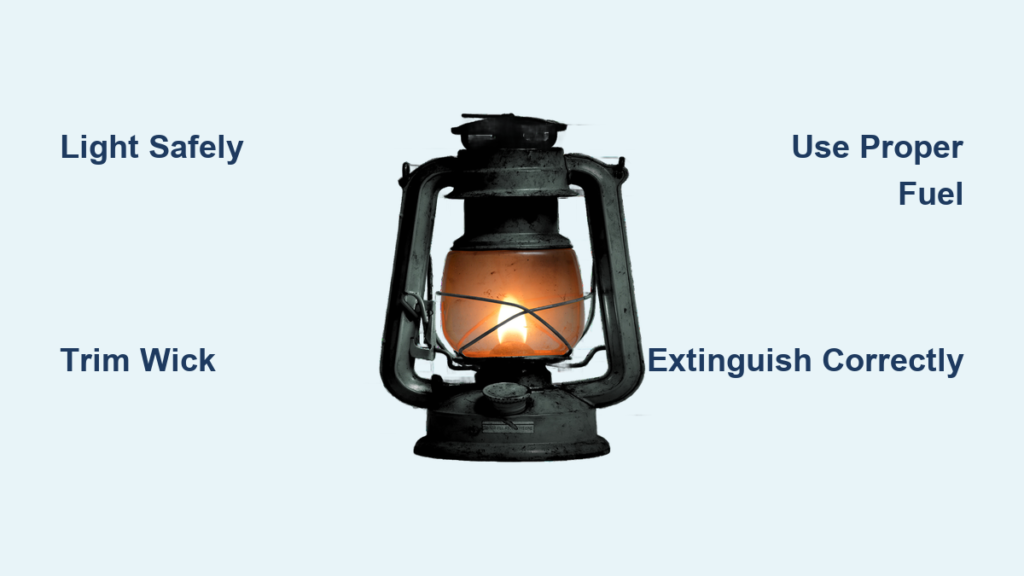
If your kerosene lamp flickers, smokes, or won’t stay lit, you are not alone. Many users struggle with proper setup, wick adjustment, and fuel safety. This guide walks you through every step from initial lighting and flame control to safe extinguishing and long-term maintenance. You will learn how to maximize brightness, minimize soot, and avoid dangerous fuel mistakes that could lead to fire or indoor pollution.
Whether you are using a simple flat-wick lamp or a high-output pressurized lantern, following the right procedures ensures clean, steady light for hours. We will break down each lamp type, explain fuel dos and do nots, and show you how to keep your lamp in top condition with minimal effort.
Light the Lamp Correctly

Proper lighting ensures a clean burn and prevents flare-ups or smoke. Follow these steps carefully to start your kerosene lamp safely.
Prepare the Chimney and Burner
Remove the glass chimney by twisting it counterclockwise. Set it aside on a clean, stable surface. Glass can crack from sudden temperature changes. Next, unscrew the burner sleeve in the same direction. This exposes the fuel chamber and allows access to the wick. Always handle the chimney gently since fingerprints and dust reduce light output and can cause hot spots.
Fill the Fuel Chamber
Pour kerosene or clean lamp oil into the font using a plastic funnel to avoid spills. Fill only to about 90% capacity. Overfilling increases pressure and the risk of leakage. Wipe any fuel from the outside with a paper towel. Never refuel a hot or lit lamp. Use only high-purity kerosene or lamp oil. Never substitute gasoline, alcohol, or diesel as these are highly volatile and can explode.
Insert and Trim the Wick
Slide the wick into the wick slot until it dips into the fuel. Let it soak for up to one hour before lighting. This ensures full saturation and prevents a weak, smoky flame. Trim the top of the wick with sharp scissors so it is even with the burner sleeve. A straight, clean cut promotes even burning. If the wick has rounded corners, it may burn unevenly and produce soot.
Adjust Wick Height Before Lighting
Use the wick control knob to lower the wick so only the tip slightly sticks out. Turn the knob clockwise to raise, counterclockwise to lower. Starting with a low wick reduces the chance of flare-ups. A high wick at ignition can cause puffing, smoke, or a tall unstable flame.
Ignite the Wick Safely
Hold a match or lighter to the exposed wick. Some lamps have a side lighter hole that lets you ignite the wick without removing the chimney. Let the flame catch naturally. Do not rush. Once lit, carefully place the glass chimney back on and twist it clockwise to secure. The chimney stabilizes airflow and protects the flame.
Stabilize the Flame
After lighting, the lamp may produce steam or smoke for a few minutes. This is normal as moisture burns off. If smoke continues, turn the wick knob counterclockwise to lower the flame. A smaller flame burns cleaner. Once the lamp warms up, slowly raise the wick for brighter light. Aim for a steady, blue-tipped flame about 1/2 inch high. A yellow, flickering flame means incomplete combustion.
Extinguish Without Smoke or Risk
Turning off a kerosene lamp improperly can release fumes or cause burns. Use the correct method to snuff the flame safely.
Use a Snuffer or Chimney Cap
The safest way to extinguish the lamp is with a snuffer cap or by placing the chimney over the flame if designed for it. These cut off oxygen and smother the flame without releasing unburned vapors. Never blow out a kerosene lamp. This sprays hot fuel and soot into the air, creating a fire hazard and indoor pollution.
Let the Lamp Cool Before Moving
After extinguishing, leave the lamp undisturbed for 10 to 15 minutes. The font, burner, and chimney retain heat and can cause burns. Moving a hot lamp may also spill fuel or crack the glass. Only handle once cool to the touch.
Avoid Extinguishing in Wind
If using outdoors, shield the lamp when snuffing. Wind can force air through the chimney and reignite vapors. Use a snuffer cap instead of relying on the chimney in breezy conditions.
Know Your Lamp Type and Features

Different kerosene lamps produce varying light levels and require specific handling. Identify your model to optimize performance.
Flat-Wick Lamps: Simple and Reliable
These common table lamps use a flat cotton wick that draws fuel via capillary action. They are easy to operate but limited to 8 to 25 lumens. Keep the wick trimmed and low to prevent soot. These lamps are ideal for indoor ambiance or emergency use.
Central-Draft Lamps: Brighter and Cleaner
These use a tubular wick with a central air tube that feeds oxygen into the flame core. They produce 3 to 4 times more light than flat-wick models and burn cleaner. Requires precise wick height to avoid carbon buildup. Best for larger rooms or workspaces.
Side-Draft Lamps: Wind-Resistant Design
Used in models like Ideal Brenner, these lamps fold a flat wick into a circle, allowing air to flow through the center from the sides. No central tube needed. Great for outdoor or drafty areas. Ensure airflow vents are unblocked.
Duplex Lamps: Dual-Wick Brightness
Popular in vintage British lamps, these have two parallel wicks under one chimney. Each wick adjusts separately, allowing fine-tuned brightness. Produces significantly more light than single-wick types. Clean both burners regularly.
Mantle Lamps: High-Output Glow
These use a fabric mantle coated with thorium or yttrium salts. When first lit, the fabric burns away, leaving a fragile ceramic mesh that glows brightly when heated. Produces up to 100 lumens, four to five times brighter than a flame alone. Handle mantles with care since vibration or improper wick height can damage them.
Pressurized Lamps: Maximum Brightness
Models like Coleman, Petromax, and Tilley use a hand pump to pressurize the fuel tank. Kerosene vaporizes and burns to heat a gas mantle, producing intense light. Complex to operate but ideal for camping or workshops. Requires regular maintenance and priming.
Kerosene Lantern Types
Three main types are used for outdoor and mobile lighting. Dead-flame lanterns have an open wick and simple design but are susceptible to wind. Hot-blast models preheat incoming air with exhaust heat, so wind actually strengthens the flame. Cold-blast lanterns send fresh air only to the burner, making them brighter and safer. Tipping cuts off oxygen, extinguishing the flame in seconds.
Clean and Maintain for Long Life
Regular upkeep prevents clogs, soot, and poor performance. A well-maintained lamp lasts decades.
Clean the Glass Chimney Weekly
Wipe the inside and outside with a soft cloth or crumpled newspaper. Avoid paper towels since they can leave lint. Soot buildup blocks light and causes uneven heating. Never wash a hot chimney with cold water. Thermal shock can shatter it.
Trim the Wick After Every Use
Charred wick tips create smoke and reduce efficiency. Use sharp scissors to cut the top straight across. Rounded corners help the wick burn evenly. Replace the wick if frayed or hardened.
Deep Clean the Burner Monthly
Remove the wick and drain leftover fuel. Soak the burner in a mix of equal parts water and baking soda, brought to a boil. Let sit overnight for heavy deposits. Scrub gently with a kitchen brush. Rinse thoroughly and dry with a hair dryer. No moisture should remain before reassembling.
Check for Clogs and Corrosion
A clogged wick tube restricts fuel flow, causing dim or flickering light. Use a thin wire or pipe cleaner to clear debris. Inspect metal parts for rust or corrosion, especially in humid environments. Replace damaged components promptly.
Choose the Right Fuel and Store Safely
Using the correct fuel prevents fires and health risks. Storage matters just as much as operation.
Use Only Kerosene or Lamp Oil
Never use gasoline, ethanol, or diesel. Even small amounts of gasoline lower the flash point, making vapors ignite easily. Use only clear, high-purity kerosene or refined lamp oil. These burn cleaner and produce less odor.
Ventilate the Room During Use
Kerosene smoke contains harmful particulates linked to respiratory issues, asthma, and cancer. The World Health Organization warns against indoor use without ventilation. Always open a window or door slightly when operating indoors.
Store Fuel in Approved Containers
Keep kerosene in a labeled, resealable metal or plastic container away from heat, sunlight, and children. Never store fuel near appliances or in living areas. Use a funnel to prevent spills when refilling.
Empty Lamp Before Long Storage
If storing for more than 2 to 3 months, drain all fuel. Residual kerosene can degrade seals and leave varnish in the font. Remove the wick and lay it in the empty chamber or drape it over the burner. Store the lamp with the chimney on to keep dust out.
Maximize Light and Efficiency
Understanding brightness helps you choose the right lamp for your needs.
Compare Light Output by Type
A flat-wick lamp with a 1/4-inch wick produces about 25 lumens, similar to a 1.65-watt bulb. A 1-inch flat wick yields approximately 151 lumens, comparable to a 10-watt bulb. A 1.5-inch round wick can reach 1000 lumens, equivalent to a 67-watt bulb. Mantle lamps produce up to 3771 lumens, matching a 251-watt bulb. A 37-lumen lamp used 4 hours daily burns about 3 liters of kerosene per month.
Adjust Flame for Efficiency
A tall yellow flame wastes fuel and creates soot. Aim for a short, blue-tipped flame. Use the wick knob to fine-tune brightness. Lowering the flame by 1/8 inch can cut fuel use by 20% without sacrificing visibility.
Position for Best Illumination
Place the lamp on a level, non-flammable surface away from curtains, books, or bedding. Elevate it slightly on a table or stand to reduce shadows. Avoid drafty areas unless using a wind-resistant lantern.
Store Properly for Future Use
Correct storage prevents damage and ensures quick setup when needed.
Follow the 5-Step Storage Routine
Empty the fuel chamber by draining kerosene into a sealed container. Remove the wick to prevent fuel residue and wick degradation. Clean all parts, wiping the chimney, cleaning the burner, and drying thoroughly. Reassemble and cover, storing with the chimney in place to block dust. Keep in a cool, dry place away from children, heat, and sunlight.
Prepare for Reuse
When returning the lamp to service, refill with fresh kerosene. Insert a new or cleaned wick. Allow 30 to 60 minutes for soaking. Test in a safe area before relying on it.
Key Takeaways for Using Kerosene Lamps
Mastering how to use a kerosene lamp requires attention to proper lighting technique, fuel safety, and regular maintenance. Always use only high-purity kerosene or lamp oil, never gasoline or other volatile fuels. Light the wick properly by allowing adequate soaking time and starting with a low flame to prevent smoke and flare-ups. Adjust the wick height gradually to achieve a steady blue-tipped flame about 1/2 inch tall for optimal brightness and efficiency.
Ventilation is critical when using kerosene lamps indoors. The World Health Organization classifies kerosene as a polluting fuel with serious health risks. Open a window or door slightly during operation. Extinguish the flame using a snuffer cap or designed chimney method, never by blowing. Allow the lamp to cool completely before moving or storing.
Regular maintenance extends the life of your lamp significantly. Clean the glass chimney weekly, trim the wick after each use, and deep clean the burner monthly. Store fuel separately from the lamp during long periods. With proper care, a kerosene lamp provides reliable, nostalgic lighting for emergencies, camping, or ambient home use.
Frequently Asked Questions About Kerosene Lamps
Can I use gasoline in a kerosene lamp?
Never use gasoline in a kerosene lamp. Gasoline has a much lower flash point and higher vapor pressure than kerosene, creating serious explosion and fire hazards. Always use only high-purity kerosene or refined lamp oil specifically designed for these lamps.
Why does my kerosene lamp smoke so much?
Smoking usually indicates the wick is set too high or the flame is too large. Lower the wick using the control knob until the flame stabilizes. A yellow, flickering flame means incomplete combustion. Trim the charred tip of the wick after each use to maintain clean burning.
How long should I let the wick soak before lighting?
Allow the wick to soak in kerosene for up to one hour before lighting. While you may be able to light it sooner, complete saturation ensures a steady, clean burn without smoking or flickering.
Is it safe to use a kerosene lamp indoors?
Kerosene lamps can be used indoors with proper ventilation. The World Health Organization warns that kerosene smoke contains harmful particulates linked to respiratory issues, asthma, and cancer. Always open a window or door slightly when operating the lamp inside.
How do I extinguish a kerosene lamp safely?
Use a snuffer cap or place the chimney over the flame if designed for this purpose. This smothers the flame by cutting off oxygen. Never blow out a kerosene lamp since this sprays hot fuel and soot into the air, creating fire hazards and indoor pollution.
How often should I clean my kerosene lamp?
Clean the glass chimney weekly by wiping away soot with a soft cloth or newspaper. Deep clean the burner monthly by soaking it in a baking soda and water solution. Trim the wick after each use to remove charred portions and maintain efficient burning.