You’ve spotted a stunning stained-glass lamp at an estate sale or online listing, and the seller claims it’s a genuine Tiffany lamp. With authentic pieces selling for hundreds of thousands or even millions of dollars, verifying its legitimacy is critical. Unfortunately, reproductions and mislabeled “Tiffany-style” lamps are everywhere. The good news? With the right knowledge, you can spot the real thing.
A true Louis Comfort Tiffany lamp was made between 1900 and 1930 by Tiffany Studios in New York. These are not mass-produced decor items but handcrafted works of art, combining innovative glass techniques, nature-inspired designs, and bronze casting mastery. This guide reveals how to identify a genuine Tiffany lamp using authentic markings, glass quality, construction methods, design motifs, base characteristics, and expert verification.
Check for Authentic Signature Marks
The first step in how to identify a Tiffany lamp is examining the maker’s mark. Most genuine lamps are clearly marked on the bottom of the bronze base. Common inscriptions include “Tiffany Studios New York,” “L.C. Tiffany,” or simply “Tiffany.” These markings are engraved, etched, or stamped, never painted or glued. Use a magnifying glass to inspect the lettering. Authentic marks have consistent font style and depth, while fakes often show uneven pressure or modern typography.
Absence of a Mark Is a Red Flag
While a few rare unmarked lamps exist, no signature drastically reduces the likelihood of authenticity. As one top-tier appraiser notes, if it was a Tiffany Studios lamp, it would be marked on the base. Unmarked stained-glass lamps styled like Tiffany’s are usually mid-20th-century reproductions, worth $50 to $500, not six figures.
Verify Internal Model Numbers
Tiffany Studios used a numbering system for design tracking. You may find numbers on the base or shade that correspond to known models in archival records. Cross-referencing these with museum catalogs or auction databases like Christie’s past sales can confirm legitimacy.
Examine the Glass Quality and Type
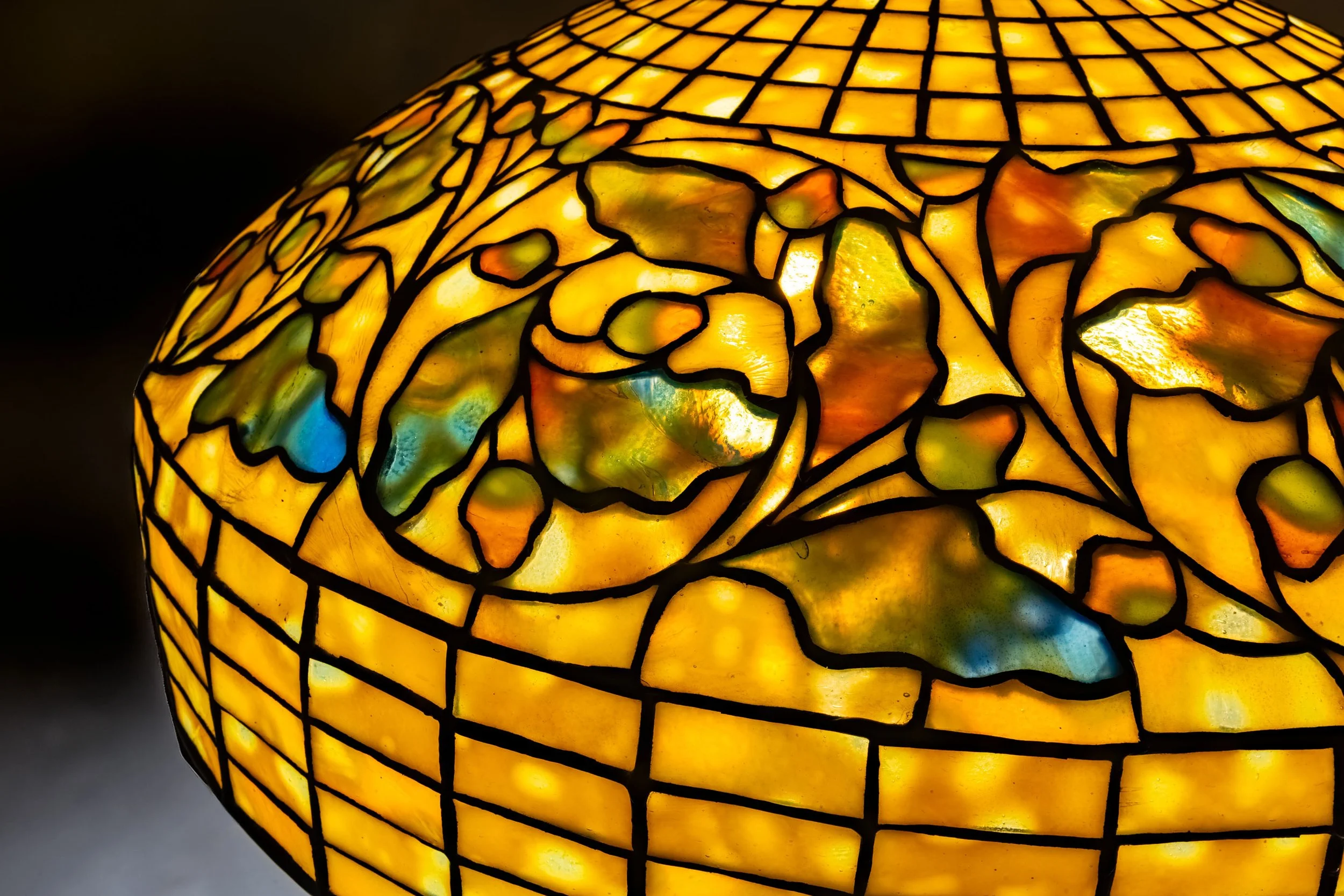
The hallmark of a real Tiffany lamp is opalescent glass, a multi-layered, iridescent material that glows from within when lit. Unlike flat-colored modern glass, authentic pieces show color variation within a single piece, depth and translucency in thicker sections, and warm luminous diffusion when illuminated. View the shade under both natural daylight and artificial light. Rotate it slowly. Real Tiffany glass reveals dynamic shifts in hue and brightness.
Identify Specialty Glass Types
Tiffany pioneered unique glass textures now difficult to replicate. Drapery glass has a folded appearance that mimics fabric and is used in petals. Ripple glass features a wavy surface like water reflections. Confetti glass is speckled with tiny colored inclusions. Mottled glass shows cloudy, streaked patterns. Custard glass is opaque yellow-cream tone. If all glass pieces look machine-cut and uniform, it’s likely a reproduction.
Inspect the Construction Technique
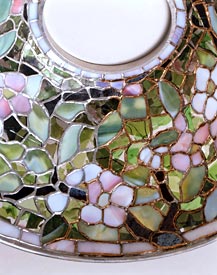
Louis Comfort Tiffany patented the copper foil technique, where each glass piece is wrapped in thin copper tape before soldering. This allowed for intricate, curved designs impossible with traditional lead came. To verify authenticity, run your finger along the seams. Authentic solder lines are smooth and consistent. Look for neat, even joints without lumps or gaps. Reject any lamp held together with glue or adhesive, a dead giveaway of a fake.
Evaluate Solder Line Precision
On genuine lamps, solder lines follow tight, complex curves with accuracy. They are uniform in width, typically 1/8 inch. The lines show no drips, blobs, or cold joints. Poorly aligned or uneven soldering suggests amateur restoration or reproduction.
Analyze the Design and Motif
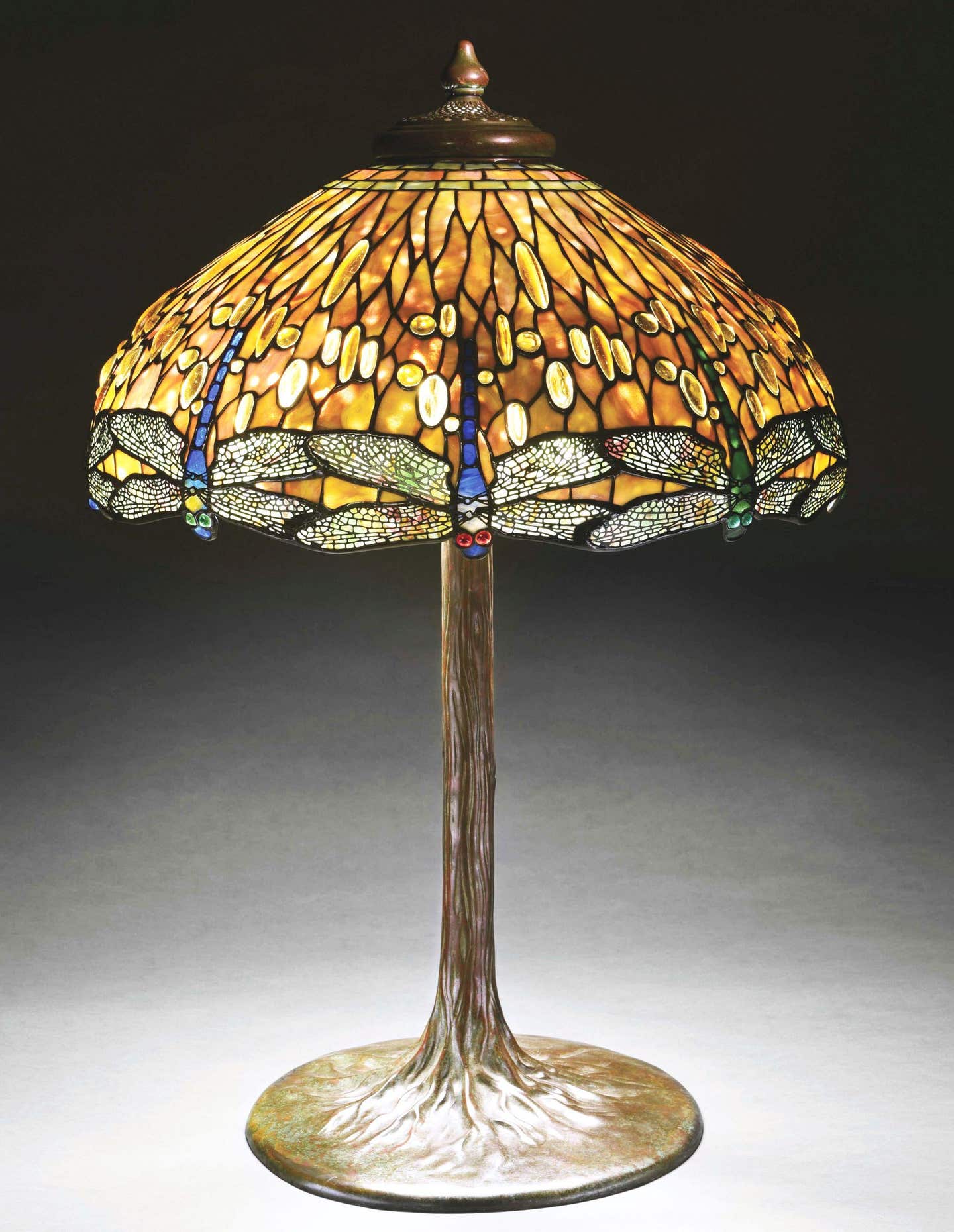
Tiffany Studios produced about 160 documented lamp designs, nearly all inspired by nature. The most valuable and recognizable include the Dragonfly Lamp with outstretched wings using amber, green, and blue glass. The Wisteria Lamp features cascading purple and white blossoms, often on a Tree base, selling for $200,000 to $500,000-plus. The Pond Lily Lamp is extremely rare with only 14 known examples; one sold for $3.37 million at Christie’s in 2018. The Poppy and Nasturtium Lamps feature bold red-orange blooms with dark centers.
Beware of Hybrid or Mismatched Parts
Some sellers pair original shades with incorrect bases or vice versa. While aesthetically pleasing hybrids exist, original pairings command higher value. For example, a Wisteria shade should sit on a Tree base, not a geometric one. Deviations in symmetry, color, or layout suggest a reproduction.
Evaluate the Bronze Base
Authentic bases were cast in-house at Tiffany’s Queens foundry using solid bronze. They are heavy and substantial. Lift it. Cheap fakes feel hollow. The bases are free of seams or mold lines indicating modern casting. They often weigh 15 to 30 lbs depending on size. Lightweight or magnetic bases are almost certainly modern reproductions.
Assess Natural Patina, Not Paint
Original bases develop a rich, multi-tonal patina over time, typically dark brown with hints of green or black oxidation. Avoid painted finishes that are often too uniform. Avoid artificial aging sprayed-on green corrosion. Avoid overly shiny or polished surfaces. Patina should look aged but not damaged. Buffing or refinishing reduces value.
Inspect Casting Detail
Look for sharp, defined motifs like tree bark, vines, flowers, or dragon forms without casting flaws. Mosaic or enamel inlays, as seen on the rare Lotus Lamp, add to authenticity and value.
Assess Condition and Restoration
As century-old antiques, some imperfections are normal. Acceptable wear includes hairline cracks in non-central glass pieces, slight discoloration of older solder, and surface wear on the base from display. Red flags include missing or replaced glass especially in focal areas, warped or sagging shade indicating poor support or heat damage, and extensive breakage or cloudiness.
Scrutinize Restoration Work
Restoration is common, but quality varies. Well-matched glass and seamless soldering may preserve value. Mismatched colors, visible glue, or modern hardware destroy authenticity. Rewiring is acceptable if done carefully. Avoid plastic sockets or mismatched finials. Older restorations may use slightly off-color glass, making them easier to spot than modern attempts.
Trace Provenance and Documentation
Strong provenance can double or triple a lamp’s value. Look for original sales receipts or invoices from the early 1900s. Look for photographs of the lamp in past collections. Look for letters of authenticity from experts or institutions. Look for exhibition history displayed in a museum. Lamps with museum lineage or celebrity ownership are especially prized.
Use Auction Records as Benchmarks
Compare your lamp to verified sales. The Pond Lily Lamp sold for $3.37 million at Christie’s in 2018. The Pink Lotus Lamp sold for $2.8 million at Christie’s in 1997. The Wisteria Lamp sells for $450,000-plus depending on condition. Even simpler geometric designs start around $5,000, far above the $50 to $500 range for reproductions.
Spot Common Fakes and Reproductions
Many modern lamps are labeled “Tiffany-style” and not meant to deceive. But beware sellers claiming authenticity without proof. Fake indicators include flat, lifeless glass with no color variation. Machine-cut pieces with perfect symmetry. Glue instead of solder. Hollow or lightweight bases. Artificially aged patina that is too green or too even.
Know the History of Imitations
While competitors copied Tiffany during his lifetime, widespread reproductions began in the 1970s. Today, most Tiffany lamps sold online are Chinese-made decor items with no connection to the original studio. Even a “Tiffany Studios” stamp is not foolproof. Fakes can be forged. Always verify through material and construction analysis.
Get a Professional Appraisal
When in doubt, hire a professional appraiser. Look for certification from ISA or ASA. Look for specialization in antique lighting or stained glass. Look for experience with auction houses like Sotheby’s or Christie’s. They will examine glass type and origin, soldering technique, base material and casting, design accuracy, and evidence of restoration.
Request a Formal Appraisal Report
A legitimate appraisal includes a detailed written description, high-resolution photos, condition assessment, provenance if available, estimated market value, and authenticity conclusion. This document is essential for insurance, resale, or estate valuation.
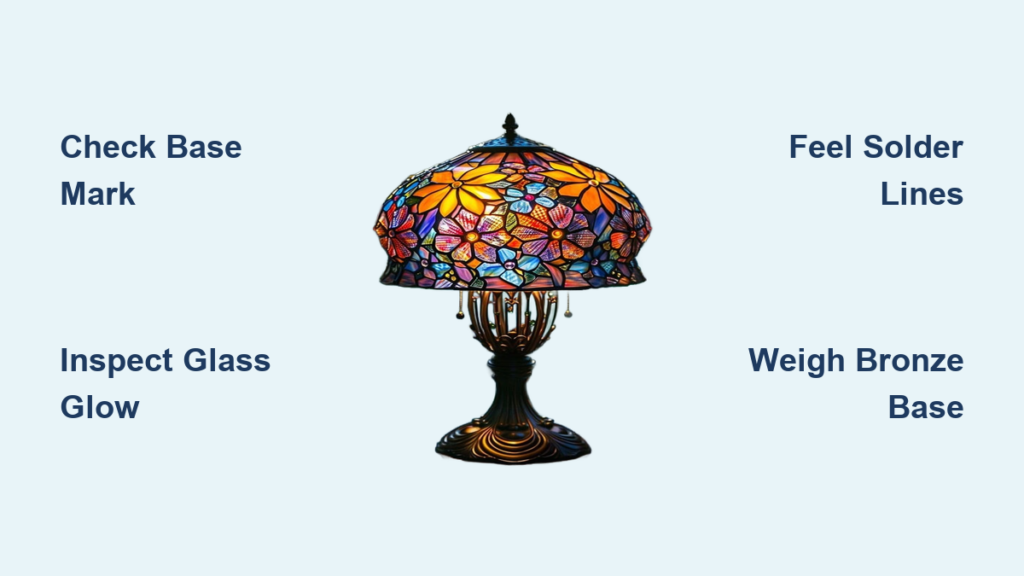
8-Step Authentication Checklist
- Check the base. Is “Tiffany Studios New York” engraved or stamped?
- Inspect the glass. Does it glow with opalescence and color shifts?
- Feel the seams. Are solder lines smooth, even, and copper-foiled?
- Weigh the base. Is it heavy, solid bronze with natural patina?
- Compare the design. Does it match a known model like Dragonfly or Wisteria?
- Look for flaws. Are there missing pieces, warping, or poor repairs?
- Research history. Is there photos, receipts, or exhibition proof?
- Call an expert. When uncertain, get a certified appraisal.
Frequently Asked Questions About Identifying Tiffany Lamps
How can I tell if a Tiffany lamp is real?
Examine the base for an engraved “Tiffany Studios New York” mark. Inspect the glass for opalescence and color variation. Feel the seams for smooth, even copper foil soldering. A genuine Tiffany lamp will have all these characteristics. No signature is a major red flag.
What is the difference between a Tiffany lamp and a Tiffany-style lamp?
A genuine Tiffany lamp was made by Tiffany Studios between 1900 and 1930 and bears the maker’s mark. A Tiffany-style lamp is a modern reproduction, often mass-produced, with no connection to the original studio. Authentic pieces sell for thousands to millions of dollars. Reproductions typically sell for $50 to $500.
What should I look for in the glass of an authentic Tiffany lamp?
Look for opalescent glass that glows from within when lit. The glass should show color variation within each piece, shifting from one hue to another. Specialty glass types like drapery, ripple, confetti, mottled, and custard glass indicate authenticity. Flat, uniform glass suggests a reproduction.
How much is a real Tiffany lamp worth?
Authentic Tiffany lamps range widely in value. Simple geometric designs start around $5,000. Famous models like Wisteria sell for $200,000 to $500,000-plus. The rare Pond Lily Lamp sold for $3.37 million at Christie’s. Reproductions are worth $50 to $500.
Can a Tiffany lamp be appraised without a signature?
While absence of a signature raises significant concerns, a professional appraiser can evaluate based on glass quality, construction technique, base material, and design characteristics. However, unmarked lamps are far less likely to be authentic and will have significantly lower value.
Key Takeaways for Identifying a Real Tiffany Lamp
A genuine Tiffany lamp is a masterpiece of American decorative art made between 1900 and 1930 by Tiffany Studios. Always check for the engraved maker’s mark on the base first. Examine the glass for opalescence, color variation, and specialty types like drapery or ripple glass. Confirm copper foil construction with smooth, even solder lines. The base should be heavy solid bronze with natural patina. Match the design against known models like Dragonfly, Wisteria, or Pond Lily.
With prices reaching seven figures, the stakes are high when learning how to identify a Tiffany lamp. Prioritize physical inspection and expert input over seller claims. By mastering these identification techniques, you’ll protect your investment and honor the legacy of Louis Comfort Tiffany’s unparalleled craftsmanship.