Dust, grime, and everyday wear can dim the glow of your favorite lamp, literally. Over time, lamp shades collect dust, smoke residue, pet hair, and even kitchen grease, reducing light output and dulling your decor. Knowing how to clean lamp shades properly is essential for maintaining both their appearance and function. The right method depends entirely on the material: fabric, paper, glass, or natural fibers like rattan all require different care. Using the wrong technique, like soaking a glued paper shade or machine-washing delicate silk, can ruin it in minutes.
The good news is that most shades can be refreshed with simple tools you already own: a microfiber cloth, soft brush, or vacuum with a brush attachment. This guide breaks down safe, effective cleaning methods by material, highlights what tools to use and avoid, and shows you when it is time to replace rather than restore.
Dusting Techniques for All Lamp Shades
Regular dusting keeps lamp shades looking fresh and extends the time between deep cleans. The method varies slightly by material, but the principles remain the same: gentle, dry, and consistent.
Use the Right Dry Tools
For most shades, start with one of these tools:
• Microfiber cloth: Lifts dust without scratching.
• Feather duster: Ideal for quick cleanups on delicate surfaces.
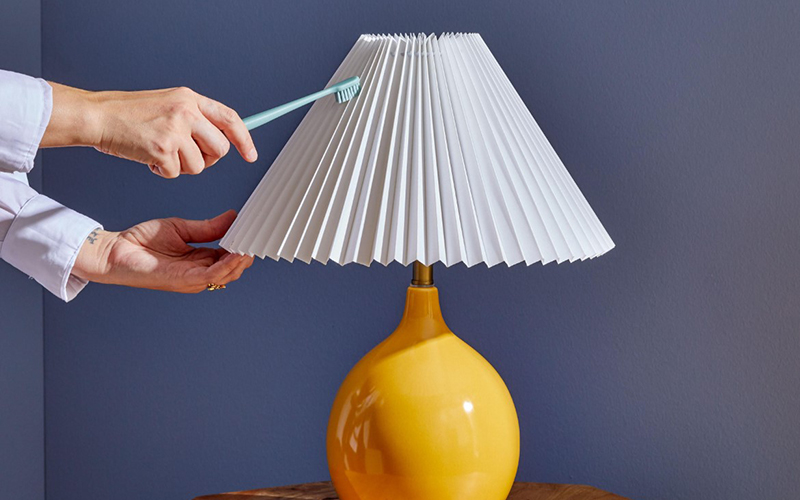
• Soft-bristle paintbrush (new): Reaches into pleats and textured designs.
• Vacuum with upholstery or brush attachment: Removes embedded dust. Use low suction to avoid pulling or tearing.
Hold the shade securely while dusting, especially if it is lightweight or has a fragile frame. Work from top to bottom to catch falling particles.
Avoid Common Dusting Mistakes
• Do not flick a feather duster aggressively. This spreads dust instead of removing it.
• Never use a damp cloth on paper or silk unless specified. Moisture warps and stains these materials.
• Skip the lint roller on delicate fabrics. It can snag fibers or leave adhesive residue.
• Avoid Magic Erasers on soft or porous materials. They are too abrasive.
Pro Tip: Rotate your lamp shade every few months to prevent uneven dust buildup and fading from light exposure.
Clean Fabric Lamp Shades Safely

Fabric shades, including cotton, linen, and woven blends, are common but vary in washability. Always check for glued seams, paper backing, or embellishments before wetting.
Spot Clean Stains Without Soaking
For small spills or marks, follow these steps:
1. Test first on an inconspicuous edge.
2. Mix a few drops of mild dish soap with warm water.
3. Dip a soft cloth, wring until barely damp, and blot. Never rub.
4. Dry immediately with a clean towel.
For yellowed white fabric, try a baking soda paste. Mix one tablespoon of baking soda with warm water, apply to the stained area, wait 10 to 15 minutes, blot with a damp cloth, then dry thoroughly.
Warning: Do not use this method on shades with glue. Moisture dissolves adhesives and can cause the shade to fall apart.
Hand Wash Only: Never Machine Wash
If the shade is heavily soiled and washable:
1. Fill a sink or tub with warm water and one teaspoon of gentle detergent.
2. Hold only the metal frame and submerge the shade gently.
3. Swirl slowly. No scrubbing or twisting.
4. Rinse in clean water until clear.
5. Press water out with a white towel. Do not wring.
6. Air dry flat on a towel, reshaping as needed.
User Success: One owner revived a large cotton shade with ink stains using hand washing and sun drying, which helped disinfect and brighten the fabric.
Handle Linen Shades with Care

Linen looks elegant but reacts poorly to excess moisture and heat.
Clean Only When Necessary
• Spot clean first. Deep cleaning risks shrinkage or warping.
• If washing, follow the hand-wash method for fabric shades.
• Always air dry flat and reshape during drying.
Prevent Mildew and Warping
• Never leave the shade damp. Drying must be complete before reattaching.
• Avoid direct sunlight during drying to prevent fading.
• Use a fan on cool setting to speed up air drying if needed.
Maintenance Tips for Linen
• Dust weekly with microfiber cloth or soft brush.
• Wear clean hands when handling to avoid oil transfer.
• Consider a fabric protector spray. Test on a hidden area first.
Clean Silk, Parchment, and Delicate Materials
These shades are not water-safe. Moisture damages fibers, dissolves glue, and causes warping.
Use Dry Cleaning Methods Only
• Dry cleaning sponge: Gently rub surface to lift dust.
• Soft paintbrush: Ideal for pleats and tight crevices.
• Vacuum on low with brush attachment. Glide lightly over surface.
• Canned air or electric duster: Blow dust from textured areas. Hold nozzle six or more inches away.
Treat Mildew as Last Resort
If mold appears and dry methods fail:
1. Mix one-quarter cup of bleach with one gallon of cool water.
2. Apply evenly with a sponge. Never spot-treat only to avoid streaks.
3. Wait five minutes, then rinse quickly and blot dry immediately.
Warning: Bleach may discolor or weaken fibers. Use only on white, sturdy shades and as a final option.
Expert Advice: If cleaning risks damage, replacement may be safer than leaving residue that attracts more dirt.
Never Soak Paper Lamp Shades
Paper shades, including mulberry, cardstock, and wallpaper varieties, are fragile and cannot be submerged.
Dry Clean With Gentle Tools
• Microfiber cloth: Wipe lightly.
• Soft brush or new paintbrush: Dust pleats carefully.
• Upholstery vacuum: Use low suction.
• White art gum eraser: Rub gently on smudges or pencil marks.
Remove Grease Without Water
- Sprinkle baking soda or cornstarch on oily spots.
- Wait 10 to 15 minutes to absorb grease.
- Gently brush off with soft brush.
For water stains, dab with a sponge barely dampened with soapy water and dry immediately with a cool hairdryer or fan.
Never use Magic Erasers. They are too abrasive and will damage paper fibers.
Wipe Glass Shades Without Streaks
Frosted, clear, or etched glass shades need streak-free care.
Clean With Damp Cloth Only
• Use a dry microfiber cloth for routine dusting.
• For fingerprints or grime, dampen the cloth slightly with water. Never spray directly.
• Wipe gently, then dry with a second clean cloth.
Avoid Glass Cleaners
• Products like Windex can leave residue on textured or frosted surfaces.
• If needed, use vinegar-water solution on a cloth. Test first.
Tip: Use a soft-bristle brush to clean etched or perforated details.
Care for Rattan, Wicker, and Natural Fibers
These porous materials absorb moisture and can grow mold if wet.
Stick to Dry Cleaning
• Microfiber cloth or soft brush: Dust regularly.
• Rubber lamp sponge (dry): Lifts embedded dust.
• Canned air or cool hairdryer: Blows out debris from tight weaves.
Light Damp Wipe for Grease in Kitchen Shades
If necessary:
• Mix few drops of dish soap with water or one-to-one vinegar-water.
• Wipe gently with a barely damp cloth.
• Dry immediately with a clean towel.
Never soak or leave damp. This leads to warping and mildew.
Clean Metal, Brass, and Perforated Shades
These durable materials tolerate mild moisture.
Wipe With Soapy Cloth
• Use damp microfiber cloth with mild soapy water.
• For grease, wipe with vinegar solution.
• Dry thoroughly to prevent tarnishing or water spots.
Clean Perforated Areas Safely
• Use a soft brush to clean holes.
• Avoid poking fingers or tools into openings. This can distort the metal.
Clean Leather and Vinyl Shades Properly
These materials should not be soaked.
Dust and Spot Clean
• Wipe with dry microfiber cloth.
• For stains, use leather-specific cleaner or damp cloth with mild soap.
• Blot dry immediately.
Condition Leather Periodically
• Apply leather conditioner to prevent drying and cracking.
• Test on hidden area first.
Best Tools for Lamp Shade Cleaning
Using the right tool prevents damage and improves results.
| Tool | Best For | Avoid On |
|---|---|---|
| Microfiber cloth | All materials | None |
| Soft-bristle brush | Pleats, crevices | Loose fabrics |
| Vacuum with brush attachment | Fabric, paper, pleated | Delicate silk |
| Dry cleaning sponge | Fabric, paper, dust | Greasy buildup |
| Art gum eraser | Paper smudges | Colored or fragile paper |
| Canned air | Tight weaves, dust | Moisture-sensitive materials |
| Hair dryer (cool) | Drying or dust removal | Heat-sensitive materials |
Skip the lint roller. It can dent fabric or leave residue.
Safe Cleaning Solutions by Material
Choose the right solution to avoid damage.
| Solution | Use For | Avoid On |
|---|---|---|
| Warm water + mild soap | Washable fabric | Glued, paper, silk |
| Baking soda paste | Yellow stains (white fabric) | Paper-backed or glued shades |
| Vinegar-water (1:1) | Grease, disinfecting | Silk, parchment, untreated wood |
| Cornstarch or baking soda | Oil absorption | Wet application |
| Diluted bleach | Mildew (white cotton or linen only) | Colored, delicate, glued materials |
| Dry cleaning stick | Spot cleaning fabric | Delicate surfaces |
Always test in an inconspicuous area first.
How Often to Clean Lamp Shades
Frequency depends on location and use.
| Location | Dusting | Deep Clean |
|---|---|---|
| Living room or bedroom | Weekly | Every 6 to 12 months |
| Kitchen | Weekly | Every 3 to 6 months |
| Bathroom | Weekly | Once a year |
| Pet-friendly or high-traffic areas | 2 to 3 times per week | Every 3 to 6 months |
Weekly dusting drastically reduces deep cleaning needs.
When to Replace vs. Clean
Some shades cannot be saved.
Replace If You See
• Persistent yellowing or smoke stains that will not budge.
• Tears, fraying, or collapsed structure.
• Warped shape from water damage.
• Loose or broken frame.
Consider Professional Restoration For
• Antique or vintage shades.
• Designer or handmade pieces.
• Sentimental or irreplaceable items.
Reality Check: Restoration can cost more than replacement, especially for paper shades.
Eco-Friendly and Professional Options
DIY Green Cleaning
• Microfiber cloth: Reusable, chemical-free.
• Vinegar plus water: Natural disinfectant.
• Baking soda and cornstarch: Non-toxic grease absorbers.
• Art gum eraser: Reusable, no waste.
Avoid single-use wipes and chemical sprays.
Professional Cleaning
• Specialists exist for antique or valuable shades.
• Most dry cleaners refuse lamp shades due to risk.
• Look for fabric restoration services instead.
Safety First: Key Rules to Remember
- Unplug the lamp and remove the bulb before starting.
- Remove the shade for full access and safety.
- Test all cleaners on a hidden area first.
- Never soak non-washable materials.
- Air dry only. No dryers or high heat.
- Handle embellishments gently. Clean around beads or tassels.
- Ensure complete dryness before reattaching.
Critical: Reattaching a damp shade risks mildew and electrical hazards.
Quick Reference: Cleaning by Material
| Material | Water Safe | Vacuum | Best Method |
|---|---|---|---|
| Cotton | Yes (gentle) | Yes | Hand wash, air dry |
| Linen | Yes (cautious) | Yes | Spot clean, lay flat to dry |
| Silk | No | Low suction | Dry sponge, soft brush |
| Paper | No | Low suction | Dry methods only |
| Glass | Damp cloth only | No | Wipe with damp microfiber |
| Rattan or Wicker | No (dry only) | Yes | Dry sponge, canned air |
| Metal | Yes | Yes | Soapy cloth, dry immediately |
| Leather | Spot only | No | Leather cleaner, no soaking |
Key Takeaways for Cleaning Lamp Shades
The secret to long-lasting lamp shades is consistent, gentle care. Always identify the material before choosing a cleaning method, as fabric, paper, glass, and natural fibers each require different approaches. Weekly dusting with a microfiber cloth or soft brush prevents deep-set grime and reduces the need for intensive cleaning. For fabric shades that are glue-free, hand washing in warm soapy water works well. For delicate materials like silk, parchment, or paper, stick to dry cleaning methods only. When in doubt, choose the gentlest option. A well-maintained lamp shade can glow brightly for years, enhancing your space with both light and style.
Frequently Asked Questions About Cleaning Lamp Shades
Can I machine wash a fabric lamp shade?
No. Machine washing can distort the shape and damage fibers. Always hand wash fabric shades gently, holding by the metal frame, and air dry flat. Never wring or twist the shade.
How do I clean a paper lamp shade without damaging it?
Paper shades should never be submerged in water. Use dry cleaning methods like a soft brush, microfiber cloth, or art gum eraser for smudges. For grease, sprinkle baking soda or cornstarch, wait 15 minutes, then brush off gently.
What is the best way to remove yellow stains from a white lamp shade?
For white fabric shades, apply a paste of baking soda and warm water to the stained area, wait 10 to 15 minutes, then blot with a damp cloth and air dry. This method works on cotton and linen but should never be used on shades with glue or paper backing.
How often should I clean my lamp shades?
Dust lamp shades weekly to prevent buildup. Deep clean every 3 to 12 months depending on location. Kitchen shades need deep cleaning every 3 to 6 months due to grease, while bedroom shades may only need it once a year.
Can I use Windex on glass lamp shades?
Avoid spray glass cleaners like Windex on textured or frosted glass. They can leave residue. Instead, use a damp microfiber cloth with water and dry with a second clean cloth for a streak-free finish.
How do I clean a rattan or wicker lamp shade?
Rattan and wicker absorb moisture easily, so stick to dry cleaning. Use a microfiber cloth, soft brush, rubber lamp sponge, or canned air. If grease is present, wipe gently with a barely damp cloth and dry immediately.