Have you ever touched a glowing glass sphere and watched lightning-like tendrils stretch toward your finger? That mesmerizing device is a plasma lamp, also known as a plasma ball or plasma globe, and it demonstrates the science of the fourth state of matter in a way that feels almost magical. Powered by high-frequency electricity and filled with noble gases, this eye-catching device turns invisible electric fields into vivid, dancing filaments of light that respond to your touch.
So how does a plasma lamp work? This guide breaks down the physics behind the glow, from ionization and electric fields to touch interaction and the historical roots of the device. Whether you’re a curious student, science enthusiast, or simply fascinated by glowing toys, you’ll discover the fascinating principles that make plasma balls one of the most engaging demonstrations of electromagnetism available.
Understanding Plasma: The Fourth State of Matter
Plasma is not a gas, liquid, or solid, it is a supercharged state where atoms split into free electrons and ions. This ionization occurs when energy like heat or electricity strips electrons from their atomic orbits, creating a conductive, light-emitting medium that responds strongly to electromagnetic fields.
What makes plasma unique is its ability to carry current and generate magnetic fields, unlike neutral gases. It is the dominant form of visible matter in the universe, powering stars like our Sun and appearing in natural phenomena like lightning and auroras. In a plasma lamp, the same principles operate on a safe, small scale, creating visible plasma at room temperature rather than millions of degrees.
Natural plasmas like those in stars burn at extremely high temperatures, but artificial plasmas in plasma balls form at much lower temperatures. These low-temperature plasmas are sustained by high-frequency voltage rather than extreme heat, making them ideal for educational and decorative use. The same technology appears in fluorescent lights, neon signs, and some television screens, though those static displays do not show the dynamic, branching behavior that makes plasma balls so visually captivating.
Inside the Glass Sphere: Noble Gases and Pressure
The vibrant colors and behavior of a plasma lamp depend heavily on the gas blend inside the sphere. Manufacturers use noble gases because they are chemically stable and emit bright light when excited by electrical current.
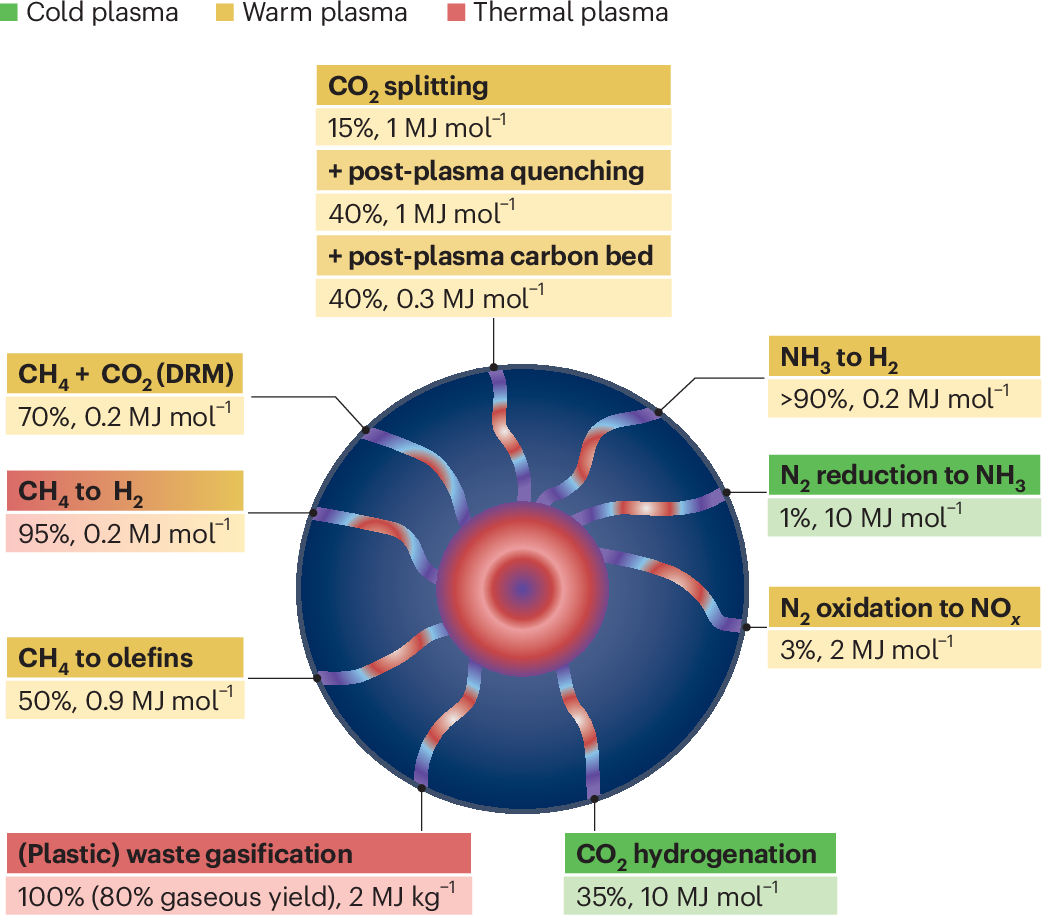
The primary gases used include neon for the classic red-orange glow most common in basic models, argon which adds blue-violet hues and helps initiate filament formation, xenon which creates white or blue-white flashes and often forms blooming tips at filament ends, and krypton which contributes pale violet or greenish-white tones for richer color variation. Some lamps include trace mercury vapor, which emits UV light that excites phosphor coatings on the glass interior, generating additional colors like green, yellow, or pink.
The gas inside operates at near-atmospheric pressure, slightly lower than normal air. This low-pressure environment allows electrons to accelerate freely between collisions, making ionization easier and sustaining longer plasma filaments. The glass must be perfectly sealed to maintain gas composition and prevent contamination, as any leak ruins performance and shortens lifespan.
Powering the Plasma: High-Voltage, High-Frequency Design
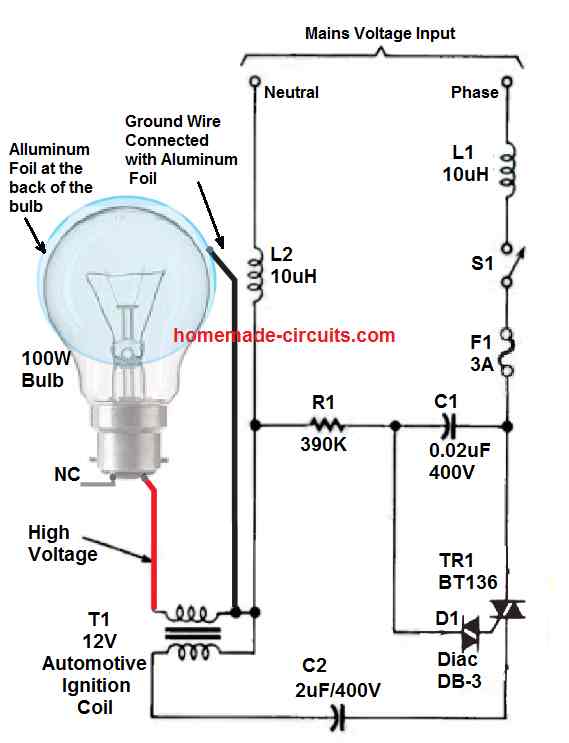
At the heart of every plasma lamp is a central electrode connected to a high-frequency power inverter. This circuit converts low-voltage input like USB power or batteries into 2 to 5 kilovolts of alternating current at around 35 kilohertz, placing it in the radio frequency range.
This setup avoids dangerous DC voltages while still delivering enough energy to ionize the gas. A flyback transformer or miniature Tesla coil typically handles the voltage boost. A transistor-based oscillator circuit generates the high-frequency signal, and in some advanced models, the glass sphere itself acts as part of a resonant cavity, feeding energy back to the driver transistor via capacitive coupling to boost efficiency.
Many lamps feature a control knob to adjust brightness and filament count. Turning it increases power, encouraging more discharge paths to form. Some designs use a hollow inner glass orb filled with conductive material like metal wool as the electrode, transferring energy via capacitive coupling through the glass and eliminating direct wiring inside the gas chamber.
Creating Plasma Filaments: Ionization in Action
When the lamp turns on, the high-voltage electrode emits RF energy, creating a strong electric field between the center and the glass wall. This field accelerates free electrons, which collide with gas atoms and knock off more electrons, triggering a chain reaction of ionization.
The first plasma forms near the electrode where the field is strongest. From there, thin branching filaments extend outward along electric field lines, seeking the inner surface of the glass. Each filament is a conducting path for electric current, and at low power, only one or two may appear. As voltage rises, multiple filaments compete for space, creating a fuller, more dynamic display.
Filaments do not travel in straight lines because the gas is not perfectly uniform. Variations in temperature, ion density, and local electric fields cause paths to fork and twist. Each branch represents a temporary path of least resistance, constantly adjusting as conditions change. This behavior mirrors natural lightning, which also follows the easiest route through the air.
Why Plasma Glows: Light Emission Explained
The glow comes from atomic excitation. Fast-moving electrons collide with gas atoms, boosting their electrons to higher energy levels. When those electrons fall back down, they release photons, which are particles of light.
The color of the light depends on the gas being used. Neon produces red-orange light, argon creates pale blue-violet, xenon generates bright blue-white, and krypton contributes pale violet or whitish-green. A spectroscope would reveal distinct emission lines for each element, confirming the gas mix.
Manufacturers blend gases to create multi-colored effects. Small amounts of xenon produce flower-like blooms at filament tips. Phosphor-coated models add secondary colors via UV excitation. Changing voltage, frequency, or pressure alters filament thickness, speed, and brightness, allowing for customized visual displays from slow, smooth tendrils to fast, pulsating storms.
Why Plasma Follows Your Finger: Touch Interaction Physics
Touching the glass creates a preferred path to ground. Your body is conductive and has capacitance of about 100 to 150 picofarads, acting like one plate of a capacitor. The plasma and your finger form a capacitive coupling across the glass, which serves as the dielectric insulator.
Electric fields concentrate toward your touch point, drawing one or more filaments directly to it. The result is a bright, focused stream that seems to follow your hand. When attracted to your finger, the plasma filament becomes brighter because more current flows into your body, and thinner due to the pinch effect where the current’s magnetic field compresses the plasma.
Touching different areas produces different results. Touching the top, which is closest to the electrode, offers the shortest path and creates a strong, stable filament. Touching the side forces a longer, lateral path and results in erratic, jumping filaments as multiple routes compete. This mimics how lightning seeks the easiest path to Earth, demonstrating real-world grounding principles.
What Makes Tendrils Move: Thermal Convection and Resistance
Much of the plasma dance comes from heat-driven convection. Gas along a filament heats up and becomes less dense, causing hot plasma to rise and curve the tendril upward. If stretched too far by moving your hand, the connection breaks, and a new filament forms from the base to restart the cycle.
This rise-and-break rhythm gives the lamp its fluid, living appearance. Filaments constantly seek optimal conductive paths. When one becomes too long or unstable, it collapses, and a fresh one forms in a better location. This is similar to Jacob’s Ladder, a classic high-voltage demonstration where arcs climb upward before snapping.
The Pinch Effect: Magnetic Self-Focusing
Every electric current generates a magnetic field around it. In a plasma filament, this field wraps circularly and exerts an inward force, squeezing the channel tighter. This phenomenon is called the pinch effect.
This self-focusing makes filaments thinner and brighter, especially under high current like during touch. It is a type of magnetohydrodynamic effect seen in fusion reactors and solar flares. In the lamp, the pinch effect enhances visual clarity, making active streams stand out against dimmer background paths.
Nikola Tesla’s Contribution to Plasma Lamps

The plasma lamp traces back to Nikola Tesla, who in 1894 filed U.S. Patent 514,170 for an Incandescent Electric Light. His design used a single electrode and high-frequency currents from his Tesla coil to create glowing discharges in partially evacuated tubes. Though not spherical or gas-blended like modern versions, Tesla’s work laid the foundation for all plasma lighting.
The modern plasma globe emerged in the 1970s, developed by James Falk as the Groundstar for science museums. His collaboration with MIT student Bill Parker refined gas mixtures and electronics, making the display stable and colorful. Parker is credited with transforming Tesla’s concept into the interactive, mass-market device known today.
Modern Plasma Lamp Variants and Features
Contemporary plasma lamps come in several variations beyond the classic globe design. Crackle tubes contain phosphor-coated beads that flash and pop when struck by plasma, adding auditory effects. Sound-activated models use built-in microphones to modulate filaments with music, creating rhythmic light shows synchronized to audio input.
Compact plasma nightlights screw into standard sockets or run on four AAA batteries. Smaller versions use USB-C input, making them portable and safe for bedrooms. Many models offer multiple operating modes including always-on, touch-sensitive activation, and music-responsive pulsing. Available as tabletop units or wall-mounted sconces, their versatility keeps them popular in homes, classrooms, and art installations.
Educational Uses: Teaching Physics Concepts

Plasma balls are staples in science classrooms and museums for demonstrating states of matter, ionization and conductivity, electric fields and capacitance, grounding and circuit completion, and electromagnetic induction. They make abstract ideas tangible by showing how electric fields bend toward conductors.
You can use a plasma lamp for safe high-voltage experiments. Place a metal plate or wire coil on the glass to capture energy via capacitive coupling. Connect a step-down transformer to convert RF output into usable low-voltage signals. Test fluorescent bulbs near the lamp, and they will glow without being plugged in. Always ensure proper grounding to avoid shocks or equipment damage.
Safety Considerations When Using Plasma Lamps
The glass can get hot during extended use, especially under active filaments. Mild tingling shocks may occur when touching metal objects near the lamp due to capacitive coupling. Avoid prolonged contact and keep away from flammable materials.
In July 2022, a spark from a plasma globe at Questacon museum in Australia ignited alcohol-based hand sanitizer on a child’s hands, causing serious burns. Never place sanitizers, solvents, or aerosols close to a plasma ball.
Plasma lamps emit radio frequency interference that can disrupt laptop touchpads, Wi-Fi and Bluetooth signals, cordless phones, and digital audio devices. Keep sensitive electronics several feet away. Bringing phones or circuit boards too close may induce damaging voltages.
High-voltage discharges interact with oxygen near the glass surface, producing small amounts of ozone detectable by a sharp, metallic smell. While levels are generally low, use in well-ventilated areas is advised, especially with prolonged operation.
Frequently Asked Questions About Plasma Lamps
Can a plasma lamp start a fire?
Yes, plasma lamps generate heat and can ignite flammable materials placed nearby. Keep paper, fabric, sanitizers, and aerosols away from operating plasma lamps.
Do plasma lamps consume a lot of power?
No, most plasma lamps consume very little power, typically less than 10 watts. They are designed for low-energy operation, often powered by USB or small batteries.
Why do different plasma lamps have different colors?
Color depends on the gas mixture inside. Neon produces red-orange, argon adds blue-violet, xenon creates white or blue-white, and krypton contributes pale tones. Manufacturers blend gases to achieve specific visual effects.
Can plasma lamps damage electronics?
Yes, plasma lamps emit radio frequency interference that can disrupt nearby electronics. Keep computers, phones, and wireless devices at least a few feet away from an operating plasma lamp.
Why does plasma follow my finger?
Your body acts as a conductive path to ground. When you touch the glass, electric fields concentrate toward your finger through capacitive coupling, drawing plasma filaments to that point.
Are plasma lamps safe to touch?
The glass surface is generally safe to touch, though it may become warm during extended use. However, you may feel a mild tingling sensation due to capacitive coupling of high-frequency voltage.
Key Takeaways for Understanding Plasma Lamps
A plasma lamp works by ionizing noble gases inside a sealed glass sphere using high-frequency, high-voltage electricity. The central electrode creates an electric field that strips electrons from gas atoms, forming plasma filaments that extend toward the glass surface. These filaments glow because excited electrons release photons when they return to lower energy states, with the color determined by the specific gases used.
The interactive behavior of plasma lamps comes from capacitive coupling. When you touch the glass, your body provides a preferred path to ground, attracting filaments to your finger. The pinch effect compresses these filaments, making them brighter and thinner. Thermal convection drives the fluid motion as heated gas rises and filaments break and reform.
From Tesla’s original experiments to modern educational tools, plasma lamps remain one of the most engaging ways to visualize fundamental physics concepts. Whether you use yours for learning, decoration, or entertainment, understanding the science behind the glow enhances appreciation for this remarkable device.