You’ve placed your Himalayan salt lamp in the living room for its warm, calming glow, only to notice it’s looking dull or even damp. Dust has settled into its crevices, and in a humid climate, it might even be “weeping” salty droplets. You’re not alone. Many owners struggle with how to clean a Himalayan salt lamp safely without damaging this natural crystal. The good news is that cleaning is simple, quick, and requires no special products.
Unlike regular lamps, Himalayan salt lamps are hygroscopic, meaning they attract moisture from the air. This makes them sensitive to water, so traditional cleaning methods like wiping with a wet cloth or using soap can dissolve the salt and ruin the lamp. In this guide, you’ll learn how to clean, dry, and maintain your salt lamp properly, including how to handle a weeping lamp, prevent moisture buildup, replace bulbs, and store it long-term.
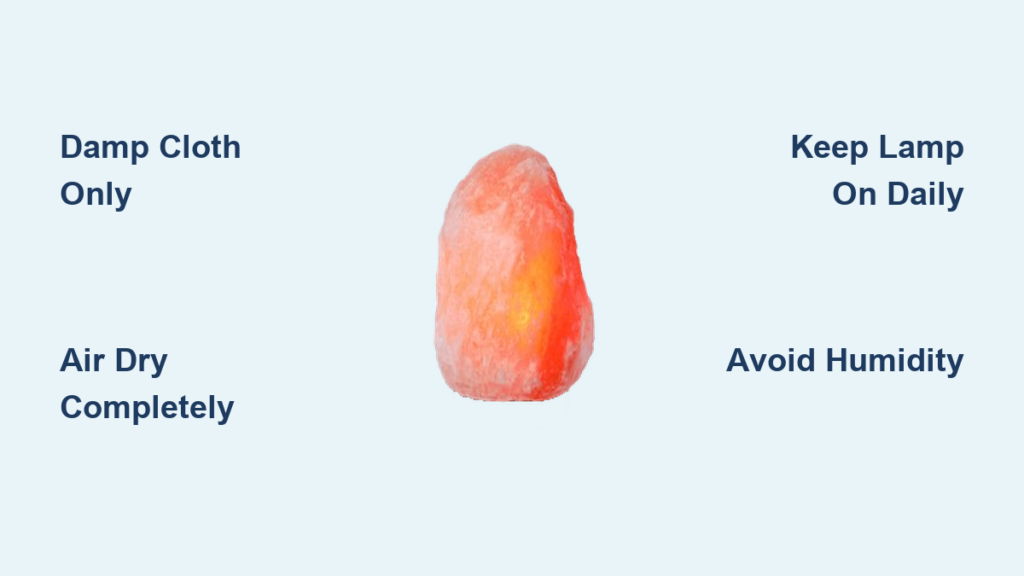
Clean With a Damp Cloth Only
The safest way to clean a Himalayan salt lamp is with minimal moisture and immediate drying.
Turn Off and Cool the Lamp
Always unplug and power down the lamp before cleaning. Let it cool completely. This takes just 5 to 10 minutes if it was recently on. Cleaning a hot lamp can cause steam or rapid temperature shifts that may lead to cracking.
Use a Slightly Damp Microfiber Cloth
Soak a soft, lint-free or microfiber cloth in hot (not boiling) water, then wring it out thoroughly. The cloth should be barely damp, like a damp dry sponge. Never use a dripping or wet cloth.
Gently wipe or dab the surface to remove dust and grime. Avoid scrubbing, circular motions, or pressure that could smooth the natural crystalline texture. For stubborn spots, apply slightly more pressure, but never use brushes, sponges, or abrasive tools.
Dry Immediately With a Clean Cloth
Right after wiping, use a second dry, soft cloth to gently dab the surface and absorb any remaining moisture. Do not rub, as this can dislodge salt particles.
Then, leave the lamp unplugged for 15 to 30 minutes to air dry completely before turning it back on. Once powered, the bulb’s heat will evaporate any residual internal moisture.
Pro Tip: Clean only when necessary. Over-cleaning dissolves a thin layer of salt and can gradually change the lamp’s shape.
Try Non-Contact Cleaning Methods
For routine maintenance or dusty environments, skip moisture entirely.
Use Compressed Air for Dust Removal
A canister of compressed air is perfect for blowing dust out of crevices and textured surfaces. Hold the nozzle 2 to 3 inches away and use short bursts. This method is ideal after home renovations or in high-dust homes.
Brush Away Dust With a Soft Bristle Tool
A clean, dry makeup brush or soft paintbrush can gently sweep dust off the surface. Work in one direction to avoid pushing debris deeper into cracks. This is especially useful for lamps with deep grooves or uneven surfaces.
Avoid Spraying Water Even Lightly
Some suggest misting the lamp with water using a spray bottle, but this is risky and not recommended. Water, even in small amounts, can seep into cracks, especially if the bulb and cord are still attached. Only consider this if the lamp is disassembled and can be fully dried afterward under sunlight or heat.
Dry a Weeping or Wet Salt Lamp
If your lamp is sweating or dripping, act fast to prevent damage.
Why Salt Lamps Weep
Himalayan salt naturally pulls moisture from the air. When the lamp is off or in a humid room, it absorbs water but cannot evaporate it. This leads to condensation, droplets, or brine pooling, often called weeping or crying.
Common causes include high humidity in bathrooms, basements, or coastal areas, leaving the lamp off for hours, and placing it near open windows or humidifiers.
Step-by-Step Drying Process
- Unplug Immediately to prevent electrical hazards. If moisture has entered the socket, do not turn it on.
- Remove the Bulb and Cord by carefully unscrewing and extracting the bulb and socket from the base. This keeps moisture from damaging electrical parts.
- Dab With a Dry Cloth by gently absorbing surface moisture with a lint-free towel. Do not wipe, as this can smear salt and leave residue.
- Air Dry in a Warm Room by placing the lamp in a dry, warm, well-ventilated area. A fan or dehumidifier speeds up drying. Avoid hairdryers or heaters, as rapid heat can crack the salt.
- Reactivate With Heat by reassembling and turning on once dry. This may take 4 to 12 hours. The bulb’s heat will finish drying the interior.
Pro Tip: Place four tealight candles around the base in humid climates. Their gentle warmth helps evaporate moisture and prevents pooling.
Prevent Moisture Build-Up
Prevention beats cleanup every time.
Keep the Lamp On Daily
Run your salt lamp for at least 16 hours a day, ideally 24/7. The heat from the bulb evaporates absorbed moisture before it pools. A 15-watt incandescent bulb uses little energy, about $10 per year if left on continuously.
Use a Dimmer Cord
A dimmer switch lets you lower brightness at night while keeping the lamp warm. This maintains drying power without glare. Many premium models include UL/ETL-certified dimmer cords and locking bulb sockets to reduce vibration damage.
Avoid Humid Rooms
Never place your lamp in bathrooms, kitchens, basements, laundry rooms, or near humidifiers or open windows. These areas have high moisture levels that overwhelm the lamp’s ability to self-dry.
Protect Surfaces With a Placemat
Always place the lamp on a coaster, tray, or wooden placemat. This catches accidental drips, prevents scratches on furniture, and protects electronics, glass, and leather from brine damage.
Replace Bulbs Safely and Quickly
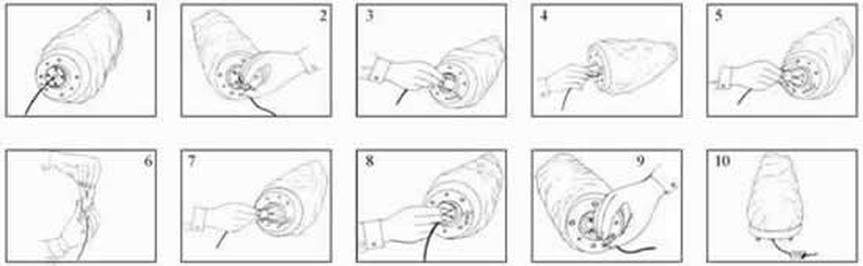
Bulbs burn out or fuse, especially in vibrating environments.
Signs You Need a New Bulb
Watch for these indicators that replacement is needed. The lamp won’t turn on, it flickers or produces dim light, there’s white powder inside the bulb indicating cracked glass, or you hear a ringing sound when shaken indicating a broken filament.
Bulb Replacement Steps
- Unplug and wait 2 minutes for cooling.
- Remove the socket from the bottom.
- Unscrew the old bulb and replace with a matching type.
- Reinsert the socket and test.
Pro Tip: Buy bulbs in bulk. A quality UL-certified incandescent bulb lasts about 1,000 hours, roughly 41 days if on 24/7. Vibration from speakers or movement shortens lifespan.
Store Properly for Long-Term Use
For breaks longer than a week, store the lamp correctly.
How to Store a Salt Lamp
- Unplug and turn off the lamp.
- Clean and dry using the standard method.
- Remove the bulb and cord.
- Wrap tightly in plastic wrap or a resealable bag to block moisture.
- Store indoors in a dry place, avoiding garages, attics, or basements.
To reactivate, unwrap, inspect for moisture, dry if needed, then plug in.
Follow Safety Rules and Avoid Mistakes
Protect your lamp and home with these do’s and don’ts.
What to Do
• Clean with a hot, barely damp cloth
• Run the lamp 16 to 24 hours daily
• Use a placemat or tray
• Replace bulbs promptly
• Store in an airtight bag when unused
• Use a 15W incandescent bulb, not LED
• Handle bulbs with gloves or tissue, as oil from fingers reduces lifespan
What to Avoid
• Submerging in water or rinsing under a tap
• Washing in a dishwasher
• Using soap, detergent, or chemicals
• Placing on electronics, glass, or leather
• Putting near loud speakers, as vibrations break bulbs
• Leaving off for long periods in humid areas
• Using LED bulbs, as they do not produce enough heat
Frequently Asked Questions About Cleaning Himalayan Salt Lamps
Can I use water to clean my Himalayan salt lamp?
Only use a barely damp cloth with hot water that has been thoroughly wrung out. Never submerge the lamp in water or use a wet cloth, as salt dissolves easily and can damage the lamp’s structure.
How often should I clean my salt lamp?
Clean only when visibly dusty or dirty. Over-cleaning can dissolve a thin layer of salt and gradually alter the lamp’s shape and finish. For most lamps, a light cleaning once every few months is sufficient.
Why is my salt lamp weeping or sweating?
This happens when the lamp absorbs moisture from the air but cannot evaporate it. High humidity, leaving the lamp off for extended periods, or placing it near humidifiers can cause weeping. Keep the lamp on for at least 16 hours daily to prevent this issue.
Can I use soap or cleaning chemicals on my salt lamp?
No. Soap, detergent, and cleaning chemicals are unnecessary and harmful. They can leave residues that attract moisture and impair the lamp’s ionization properties. Stick to a damp cloth with plain hot water.
What should I do if my lamp gets wet?
Unplug the lamp immediately and remove the bulb and cord. Dab the surface with a dry, lint-free cloth, then air dry in a warm, well-ventilated area. Do not use hairdryers or direct heat, as rapid temperature changes can cause cracking.
How do I store my salt lamp for long periods?
Clean and dry the lamp thoroughly, remove the bulb and cord, wrap it in plastic wrap or a resealable bag, and store in a dry indoor location. Avoid basements, garages, or attics with fluctuating humidity.
Key Takeaways for Maintaining Your Himalayan Salt Lamp

A Himalayan salt lamp can last for decades with proper care. The most important things to remember are to clean gently with only a barely damp cloth, keep the lamp running for at least 16 hours daily to prevent moisture buildup, and always use a protective mat under the base. Avoid water, soap, and chemicals entirely, as the salt is delicate and dissolves easily. Store the lamp in an airtight bag if unused for more than a week, and replace bulbs promptly when they burn out. With gentle cleaning, consistent heat, and mindful placement, your salt lamp will remain a beautiful, functional part of your home, offering soft light and potential wellness benefits for years to come.